UWC East Africa

UWC East Africa

700 Students | 3-19-years

Tanzania, East Africa

1973

Banner imageBanner imageBanner image

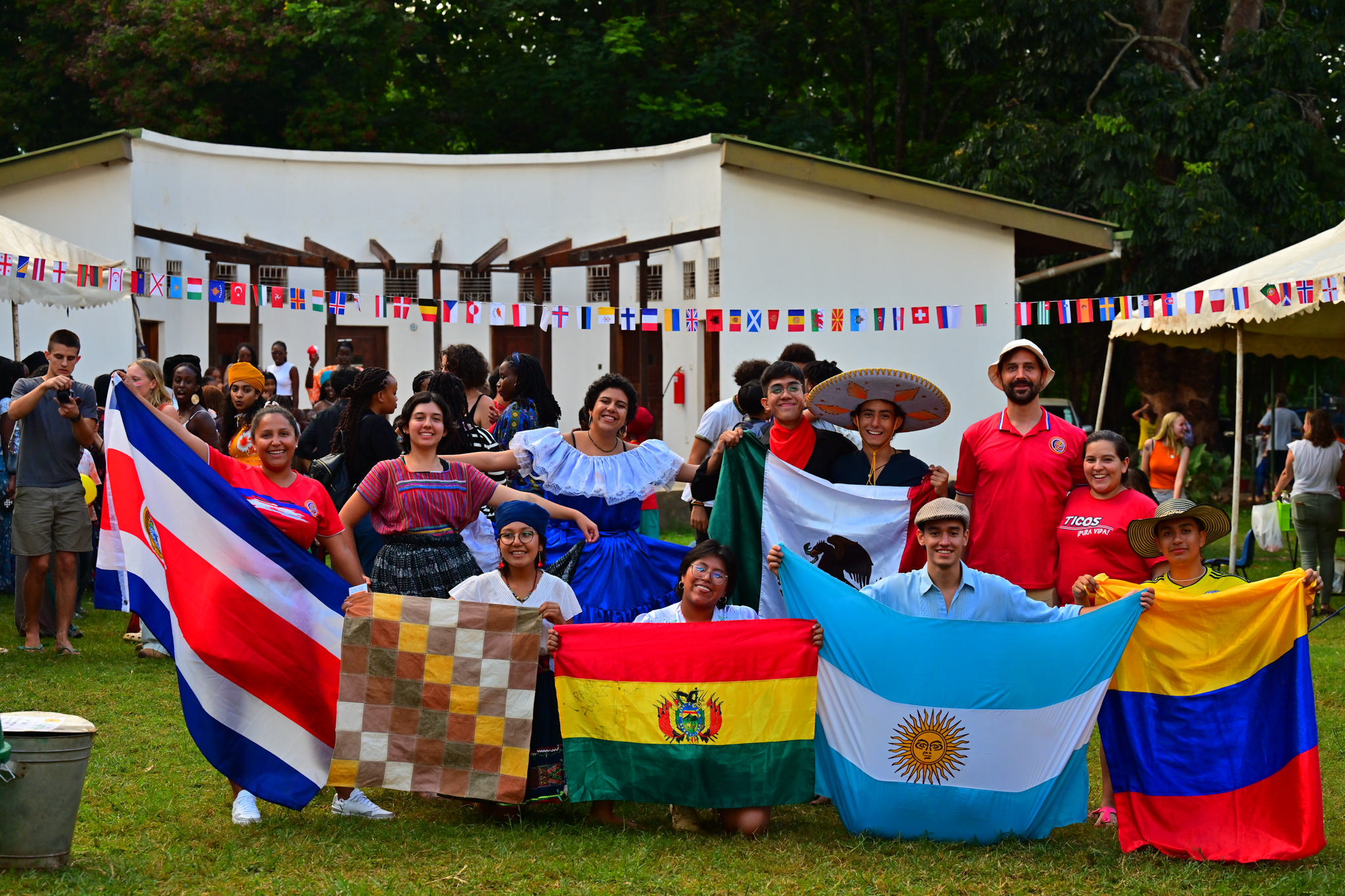
UWC East Africa (UWC EA), previously known as the International School of Moshi, joined the UWC movement in August 2019, becoming the 18th school worldwide and second on the African continent. With two campuses in Moshi and Arusha, UWCEA provides education for students ranging from 3 to 19 years old with over 100 nationalities represented overall. The school features a structured residential component for its Middle Years Programme (MYP) at the Moshi campus and International Baccalaureate Diploma Programme (IBDP) on both campuses.

Three Unique Features
  • Location: Situated in the mountainous northeast of Tanzania, with views of Mt Kilimanjaro and Mt Meru, students are surrounded by rich biodiversity and wildlife of the region. They also have the opportunity to explore the coastal beauty of the Indian Ocean in the historic Pangani town, owned by the school and located in the Tanga region.
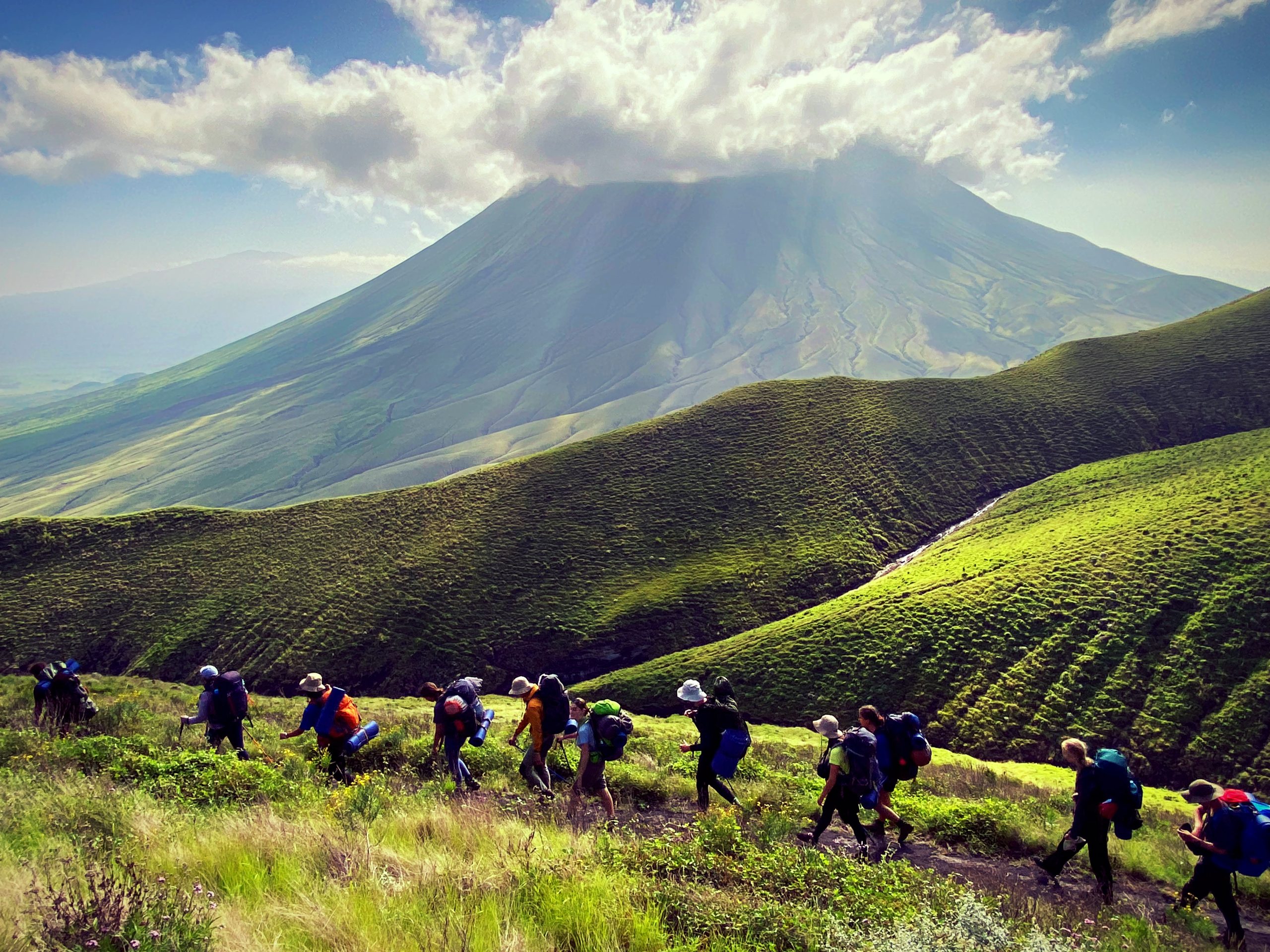
  • Outdoor pursuits programme: UWC EA offers diverse outdoor activities for students of all skill levels. These include mountaineering expeditions, off-road adventures, coral reef restoration, sea diving and more. The programme is structured around five streams: Peaks, Plains, Rides, Reefs and Mindfulness.
  • First IBDP school in Africa: With a commitment to academic excellence, UWC EA made history as Africa's inaugural International Baccalaureate (IB) school in 1973. It played a pivotal role in shaping the IB Middle Years Programme in the 1980s, reinforcing its dedication to providing a top-tier education.
UWC East Africa

Contact details - Moshi Campus - TEL: +255 27 2755004

Email school
UWC East Africa

Contact details - Arusha campus - TEL: +255 784 490133

Email school

Our students follow the International Baccalaureate Diploma Programme (IBDP), which is made up of three core components and six subject groups.

Average class size: 18 students

International Baccalaureate Diploma Programme
Core components
  • Theory of Knowledge: Students reflect on the nature of knowledge and on how we claim what we know.
  • The Extended Essay: An independent, self-directed piece of research finishing with a 4,000-word paper.
  • Creativity, Activity, Service (CAS): Students take part in a range of experiences and at least one project.
Subjects
  • Studies in language and literature: English Literature, English A Language and Literature, Swahili Literature, School Supported Self-Taught Literature
  • Language acquisition: English B, French B, French AB Initio (Arusha), Swahili AB Initio, Spanish AB Initio
  • Individuals and societies: Economics, Geography, History, Global Politics, Environmental Systems & Societies
  • Business Management sciences: Biology, Chemistry, Physics, Environmental systems & Societies
  • Mathematics: Maths - Analysis and Approaches, Maths - Applications and Interpretation
  • The arts: Visual Arts, Theatre, Music
Co-curricular

All students at UWC complete a co-curricular programme called Creativity, Activity and Service (CAS) - an integral part of the IB qualification. Students get the opportunity to choose a physical, a creative and a social service activity. UWCEA engages students to participate in different inter-school competitions locally and internationally for personal improvement and enjoyment.

Physical activities

Badminton

Basketball

Boxing

Cricket

Cross Country

Cycling

Football

Gymnastics

Netball

Rugby

Softball

Swimming

Tennis

Ultimate Frisbee

Volleyball

Walking

Yoga

Zumba

Creative activities

Afro Dance

Chess Club

Coding

College Choir

Community Choir

Cooking Club

Debate Club

Garage Band

Gardening

Knitting/Crochet Club

Model United Nations

Music

Painting

Photography

Poetry

School Production

TEDx

Yearbook

Social service

Animal Care Projects

Assistance to Local Hospital

Bee Club

Campus Care for Environmental Improvement

Community Clean-up

Farmers' Market

Library Support

Peer Listeners for Student Support

Plastic Recycling Projects

Simba's Footprint Foundation

Smokeless Kitchen

Student Climate Summit

Work with Children at Local Orphanage

Work with refugees

Project Week

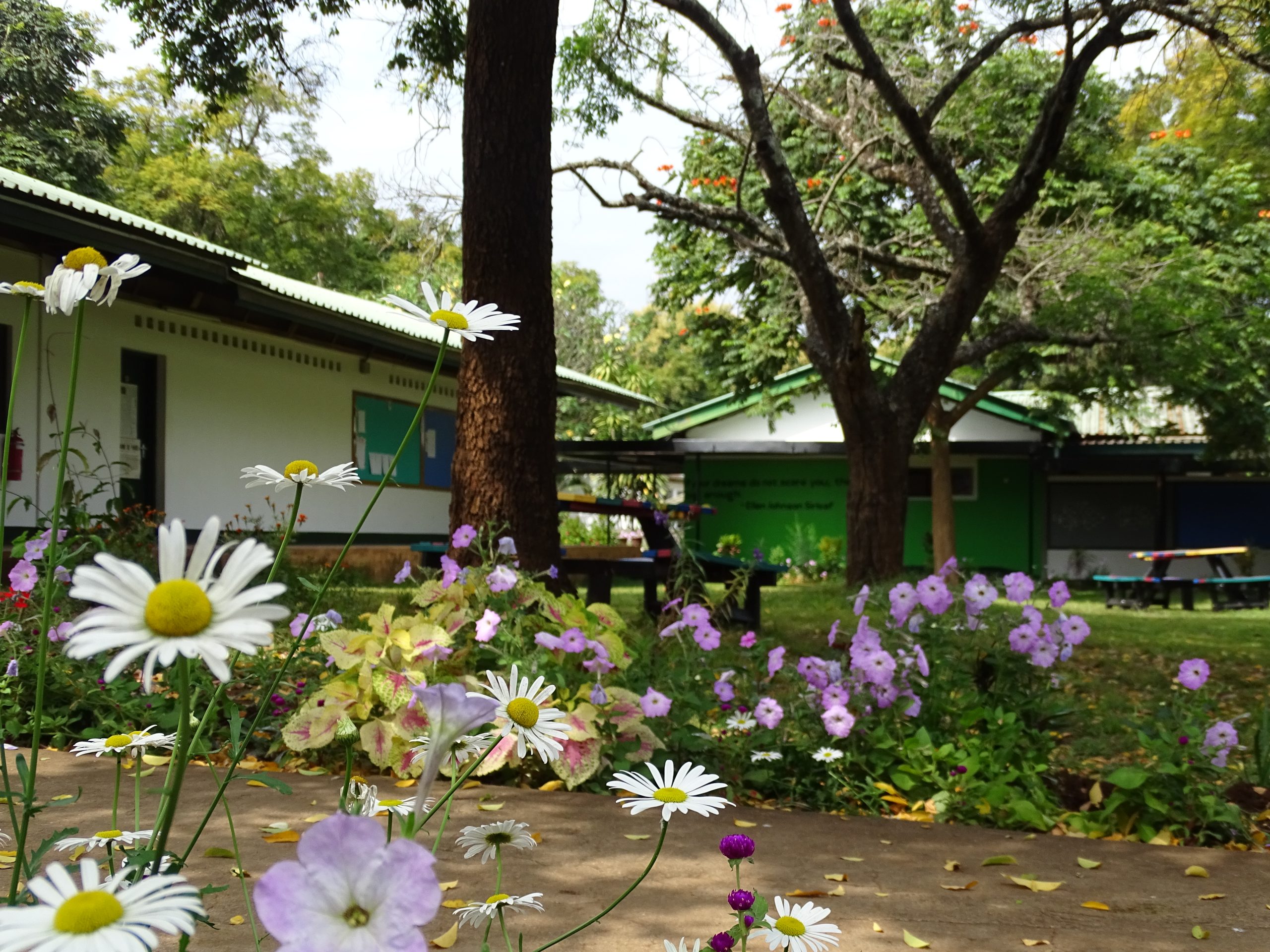
Arusha is a leafy campus spread out over 40 acres at the base of Mount Meru. Moshi is at the base of Mount Kilimanjaro and has organically grown to be a 40+ acre green, tree-filled space.

Amphitheatre

Art & design studio

Changing rooms

Dining hall with indoor and outdoor seating

Full-size football and rugby pitches

Gym and weight-training facilities

Library

Medical centre

Multi-function hall

Music room

Multi-purpose hard-court for basketball, netball and tennis

Outdoor fitness area

Outdoor swimming pool

Performance stage

Small field for seven-a-side games

Student social spaces

Theatre

400m grass-running track

Residential accommodation:

Both campuses provide an excellent environment for residential students, equipped with outdoor living areas, kitchen, laundry facilities, study rooms and Wi-Fi. In Arusha, the newly built Jacaranda, Baobab and Acacia houses accommodate up to 120 IB diploma students. The Moshi campus features nine houses, admitting residential students from age eight and above.

Medical provisions
Arusha
  • Health centre open 24 hours a day
  • Full-time nurse
  • Local hospital  five kilometres away & Arusha airport 24/7 Medivac facilities one kilometre away
Moshi
  • Health centre open 24 hours a day
  • Full-time nurse
  • Fortnightly doctor’s clinic on campus
  • Local GPs nearby and local hospital five minutes away
Academic and emotional well-being
  • Full-time counsellor available Monday to Friday 
  • Psychologist on campus three days a week in Arusha 
  • Two House parents (parents providing residential support to students) live adjacent to the student residential houses - available in the evenings and weekends 
  • Night staff on duty seven days a week 
  • Weekly meetings with tutors or mentors who oversee student progress academically, socially and emotionally

You can apply through your UWC national committee (NC) or through the UWC Global Selection Programme. Direct applications are also possible for the lower years. For more information about UWC East Africa, visit the website.

Filter

UWC East Africa

UWC East Africa

700 Students | 3-19-years

Tanzania, East Africa

1973

Banner imageBanner imageBanner image

UWC East Africa (UWC EA), previously known as the International School of Moshi, joined the UWC movement in August 2019, becoming the 18th school worldwide and second on the African continent. With two campuses in Moshi and Arusha, UWCEA provides education for students ranging from 3 to 19 years old with over 100 nationalities represented overall. The school features a structured residential component for its Middle Years Programme (MYP) at the Moshi campus and International Baccalaureate Diploma Programme (IBDP) on both campuses.

Three Unique Features

  • Location: Situated in the mountainous northeast of Tanzania, with views of Mt Kilimanjaro and Mt Meru, students are surrounded by rich biodiversity and wildlife of the region. They also have the opportunity to explore the coastal beauty of the Indian Ocean in the historic Pangani town, owned by the school and located in the Tanga region.
  • Outdoor pursuits programme: UWC EA offers diverse outdoor activities for students of all skill levels. These include mountaineering expeditions, off-road adventures, coral reef restoration, sea diving and more. The programme is structured around five streams: Peaks, Plains, Rides, Reefs and Mindfulness.
  • First IBDP school in Africa: With a commitment to academic excellence, UWC EA made history as Africa’s inaugural International Baccalaureate (IB) school in 1973. It played a pivotal role in shaping the IB Middle Years Programme in the 1980s, reinforcing its dedication to providing a top-tier education.
UWC East Africa
Contact details – Moshi Campus – TEL: +255 27 2755004Email school
UWC East Africa
Contact details – Arusha campus – TEL: +255 784 490133Email school

Our students follow the International Baccalaureate Diploma Programme (IBDP), which is made up of three core components and six subject groups.

Average class size: 18 students

International Baccalaureate Diploma Programme

Core components

  • Theory of Knowledge: Students reflect on the nature of knowledge and on how we claim what we know.
  • The Extended Essay: An independent, self-directed piece of research finishing with a 4,000-word paper.
  • Creativity, Activity, Service (CAS): Students take part in a range of experiences and at least one project.
Subjects

  • Studies in language and literature: English Literature, English A Language and Literature, Swahili Literature, School Supported Self-Taught Literature
  • Language acquisition: English B, French B, French AB Initio (Arusha), Swahili AB Initio, Spanish AB Initio
  • Individuals and societies: Economics, Geography, History, Global Politics, Environmental Systems & Societies
  • Business Management sciences: Biology, Chemistry, Physics, Environmental systems & Societies
  • Mathematics: Maths – Analysis and Approaches, Maths – Applications and Interpretation
  • The arts: Visual Arts, Theatre, Music
Co-curricular

All students at UWC complete a co-curricular programme called Creativity, Activity and Service (CAS) – an integral part of the IB qualification. Students get the opportunity to choose a physical, a creative and a social service activity. UWCEA engages students to participate in different inter-school competitions locally and internationally for personal improvement and enjoyment.

Physical activities

Badminton
Basketball
Boxing
Cricket
Cross Country
Cycling
Football
Gymnastics
Netball
Rugby
Softball
Swimming
Tennis
Ultimate Frisbee
Volleyball
Walking
Yoga
Zumba
Creative activities

Afro Dance
Chess Club
Coding
College Choir
Community Choir
Cooking Club
Debate Club
Garage Band
Gardening
Knitting/Crochet Club
Model United Nations
Music
Painting
Photography
Poetry
School Production
TEDx
Yearbook
Social service

Animal Care Projects
Assistance to Local Hospital
Bee Club
Campus Care for Environmental Improvement
Community Clean-up
Farmers’ Market
Library Support
Peer Listeners for Student Support
Plastic Recycling Projects
Simba’s Footprint Foundation
Smokeless Kitchen
Student Climate Summit
Work with Children at Local Orphanage
Work with refugees
Project Week

Arusha is a leafy campus spread out over 40 acres at the base of Mount Meru. Moshi is at the base of Mount Kilimanjaro and has organically grown to be a 40+ acre green, tree-filled space.

Amphitheatre
Art & design studio
Changing rooms
Dining hall with indoor and outdoor seating
Full-size football and rugby pitches
Gym and weight-training facilities
Library
Medical centre
Multi-function hall
Music room
Multi-purpose hard-court for basketball, netball and tennis
Outdoor fitness area
Outdoor swimming pool
Performance stage
Small field for seven-a-side games
Student social spaces
Theatre
400m grass-running track
Residential accommodation:

Both campuses provide an excellent environment for residential students, equipped with outdoor living areas, kitchen, laundry facilities, study rooms and Wi-Fi. In Arusha, the newly built Jacaranda, Baobab and Acacia houses accommodate up to 120 IB diploma students. The Moshi campus features nine houses, admitting residential students from age eight and above.

Medical provisions

Arusha

  • Health centre open 24 hours a day
  • Full-time nurse
  • Local hospital  five kilometres away & Arusha airport 24/7 Medivac facilities one kilometre away
Moshi

  • Health centre open 24 hours a day
  • Full-time nurse
  • Fortnightly doctor’s clinic on campus
  • Local GPs nearby and local hospital five minutes away
Academic and emotional well-being

  • Full-time counsellor available Monday to Friday 
  • Psychologist on campus three days a week in Arusha 
  • Two House parents (parents providing residential support to students) live adjacent to the student residential houses – available in the evenings and weekends 
  • Night staff on duty seven days a week 
  • Weekly meetings with tutors or mentors who oversee student progress academically, socially and emotionally

You can apply through your UWC national committee (NC) or through the UWC Global Selection Programme. Direct applications are also possible for the lower years. For more information about UWC East Africa, visit the website.
UWC ISAK Japan

UWC ISAK Japan

200 Students | 15-18-years

Nagano, Japan

2014

Banner imageBanner imageBanner image

Located in Karuizawa, UWC ISAK Japan opened in 2014 and became a UWC school in 2017. Co-founded by Lin Kobayashi and Mamoru Taniya and supported by “100 Founders”, the school reflects Lin Kobayashi’s passion for global education, which she developed as a student at Pearson College UWC in Canada. UWC ISAK’s aim is to educate young leaders from around the globe to be catalysts for positive change.

Three Unique Features

  • Leadership programme: Through an innovative leadership programme, combining the practice of mindful self-discipline and design innovation, students discover what is most important to them and work to become catalysts for positive change. Leadership practice is integrated into all aspects of life including academics, co-curricular and the residential experience.
  • Student-led approach: Student autonomy is emphasised and encouraged. Students are empowered to start and lead clubs, plan activities and campus events and establish and maintain policies surrounding dorm life.
  • Japanese language & culture: The opportunity to study Japanese language, regular outings and excursions give students opportunities to explore Japanese culture, history and traditions. Students can learn the art of Japanese flower arranging and attend a tea ceremony; visit castles, hot springs, temples and shrines; join in the fun at local festivals and performances; visit museums, plan a homestay and more!

Our students follow the International Baccalaureate Diploma Programme (IBDP), which is made up of three core components and six subject groups.

Average class size: 18 students

International Baccalaureate Diploma Programme

Core components

  • Theory of Knowledge: Students reflect on the nature of knowledge and on how we claim what we know.
  • The Extended Essay: An independent, self-directed piece of research finishing with a 4,000-word paper.
  • Creativity, Activity, Service (CAS): Students take part in a range of experiences and at least one project.
Subjects

  • Studies in language and literature: English Literature, English Language and Literature, Chinese Literature, Japanese Literature, Spanish Language and Literature, School Supported Self-Taught Literature
  • Language acquisition: English B, Japanese B, Spanish B, Chinese Ab Initio, Japanese Ab Initio, Spanish Ab Initio
  • Individuals and societies: Economics, History, Global Politics
  • Sciences: Biology, Chemistry, Physics, Environmental Systems & Societies, Computer Science
  • Mathematics: Maths – analysis and approaches, Maths – applications and interpretation
  • The arts: Visual Arts, Theatre, Film
The Pre-IBDP Programme

UWC ISAK Japan welcomes boarding students between the ages of 15 and 19. Fifteen-year-old students can join the school as part of its three-year high school programme, which emphasises its flagship Leadership Programme in Grade 10, before merging with the two-year IBDP in Grade 11 (16-19 year-olds).

Co-curricular

All students at UWC complete a co-curricular programme called Creativity, Activity and Service (CAS) – an integral part of the IB qualification. Students get the opportunity to choose a physical, a creative and a social service activity.

Students are in charge of developing and running their own CAS projects in groups of eight or more students, so projects change from year to year. For example, recent CAS projects have addressed clothing recycling, environmental issues and sustainability, fundraising and support for Nepal, educational support for refugees in Asia, LGBTQ+ community advocacy, food waste and youth outreach.

Physical activities

Aikido
Badminton Mixed
Ballet
Bouldering Club
Boys Basketball
Boys Volleyball
Casual Football
Competitive Soccer
Cross Country/Triathlon
Curling
Dance
Girls Basketball
Girls Gym
Girls Volleyball
Gladiator Fitness
Golf
Gym & Fitness
Netball
Rugby
Swimming
Tennis
Touch Rugby
Track & Field
Yoga & Meditation
Creative activities

Art
Band
Book
Cataclysm
Chess
Debate
Entrepreneurship
Fashion/sustainable fashion
Creative Writing
Feminism
Film
French
Global Affairs
International Baking
ISAK Decorating
Journalism
Math
Merchandise
Model United Nations
Orchestra
Photography
Politics
Pottery
Programming
Rainbow Alliance
Tea Ceremony
TEDx
Theatre
Theatre design
Yearbook
Social service

ARDEI
Peace Forum
Academic Support Team
Exhibition
Game
Guest Speaker
ICE – ISAK Cultural Events
Japanese Excursion
Lead Ambassador
Makers
Peer Support Programme
Residential Assistants
SNOW
Sustainable Farming
Sustainable School Initiative
Tech Crew
Terraforming Club
Islamic Studies
Work with elderly
Work with young children

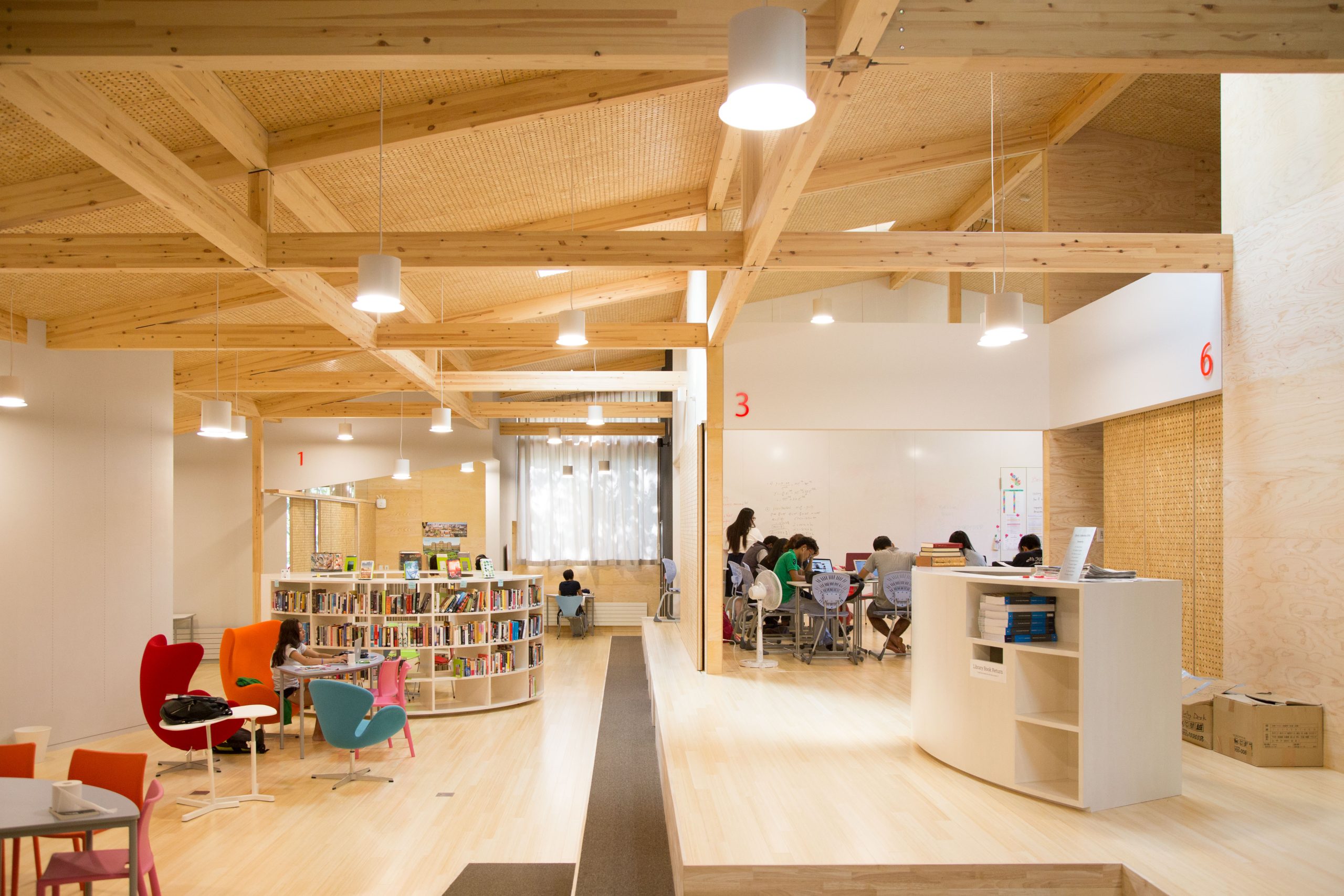
The UWC ISAK Japan campus is located in Karuizawa, a beautiful mountain resort community located approximately 70 minutes by bullet train from Tokyo. As well as modern facilities, students have regular access to exceptional local athletic facilities.

Multi-purpose Centre
Theatre stage
Cafeteria with deck terrace
Science Labs
Full-size Gymnasium
Basketball courts
Bouldering Wall
Athletic Field
Library
Four Student & Faculty Residences
Creative Centre
Darkroom
Classrooms for Art, Makerspace, Film & Theatre and Outdoor Education
Student Lounge, Study Rooms, University Advising Offices
Health & Wellness Centre featuring a Health Centre and dedicated rooms for Fitness, Meditation, Counselling and Isolation.
Residential accommodation:

There are four mixed-gender student residences. Rooms are deliberately mixed with overseas students and local students. All residences have a day room/common room and laundry room. UWC ISAK Japan offers both single-sex residences and blended houses with students sharing either a two-person or four-person bedroom. Blended houses have gender-neutral toilets and showers, as well as single-sex showers. Rooms are diverse, with students coming from different countries and cultural backgrounds. Each house includes a common area, a small kitchen and laundry facilities.

Students are expected to return home between Year one and Year two. The school provides on-campus housing or alternatives for students unable to go home for winter break. Full-time teachers also live on campus with everyone playing a significant role in the college community, creating and supporting each other’s UWC experience.

Medical provisions

  • Two full-time nurses
  • Weekly campus visits by a local doctor
  • Access to local medical and dental facilities
  • Students covered by Japan’s National Health Insurance
Academic and emotional well-being

The school supports students’ academic and emotional well-being through:

  • House mentors who support students in their residential setting 
  • Two school counsellors providing one-to-one support
  • An experienced Pastoral Care team, led by a Deputy Head of Pastoral 

You can apply through your UWC national committee (NC) or through the UWC Global Selection Programme. Direct applications are also possible for Grade 10.  For more information about UWC ISAK Japan, visit the website.

Filter

Sorry!

No Short Course found.

UWC Mostar

UWC Mostar

204 Students | 15-19-years

Mostar, Bosnia and Herzegovina

2006

Banner imageBanner imageBanner image

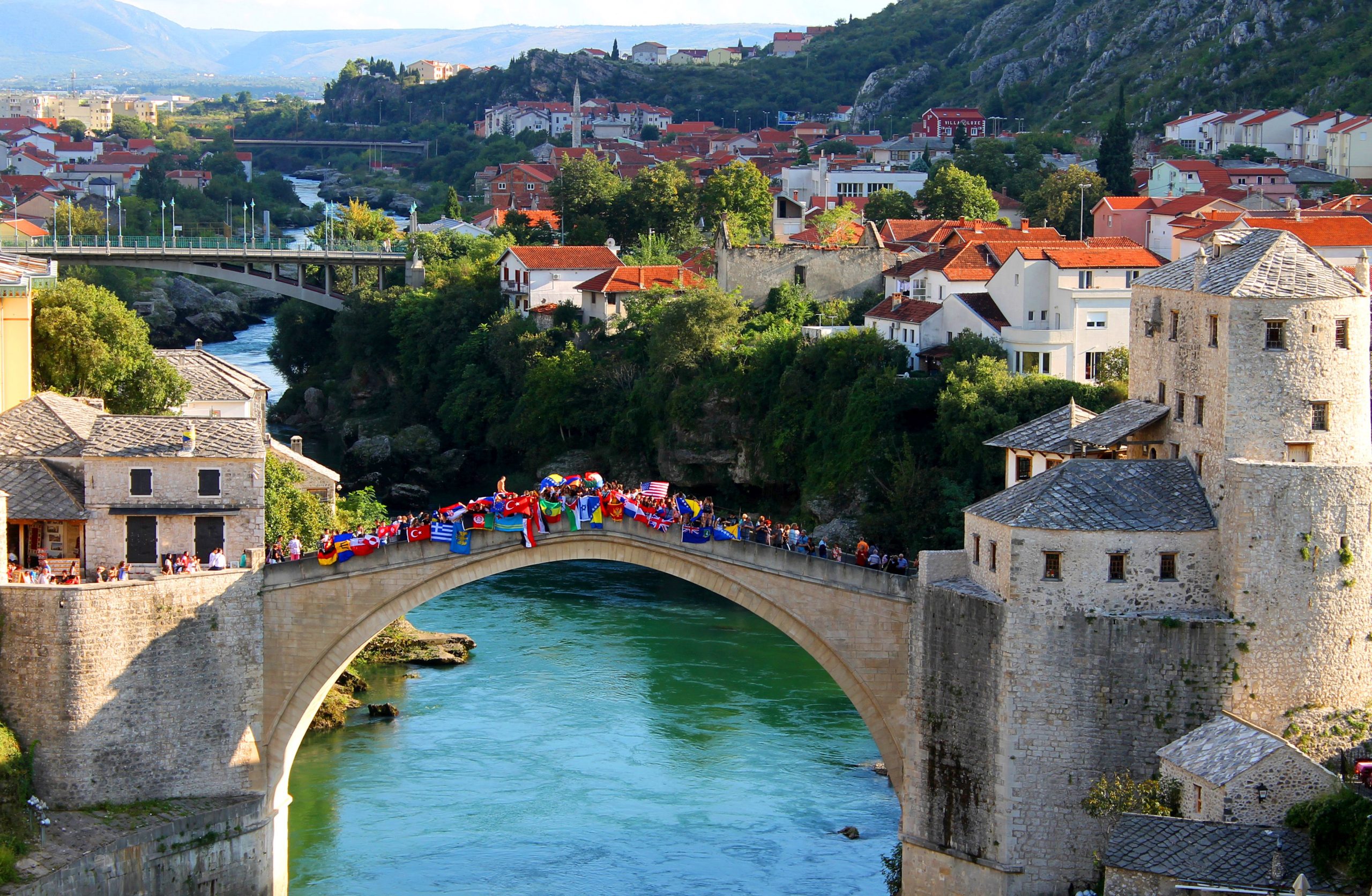
Established in 2006, UWC Mostar is the only UWC college built in a post-conflict country dedicated to “building bridges between people and cultures through inspiring, quality education”. It uniquely contributes to peacebuilding and the development of Mostar and Bosnia and Herzegovina, demonstrating through local partnerships how education can unite, inspire and engage for a peaceful and sustainable future.

Three Unique Features

  • The first UWC with an explicit aim to contribute to the reconstruction of a post-conflict society: UWC Mostar educates students to learn and appreciate their differences, at the same time promoting equality, tolerance and critical thinking.
  • Local community: The interaction of students with the local community is the essence of UWC Mostar. Annually, students and staff organise projects and over 100 events are open to Mostar and the wider community.
  • Foundation Education in Action: UWC Mostar was established by the Foundation Education in Action, which aims to become a reference point for educational reform in the country and provide high-quality teacher training with a specific focus on objective external assessment, curricular innovations and innovative learning methods.

Our students follow the International Baccalaureate Diploma Programme (IBDP), which is made up of three core components and six subject groups.

Average class size: 13 students

International Baccalaureate Diploma Programme

Core components

  • Theory of Knowledge: Students reflect on the nature of knowledge and on how we claim what we know.
  • The Extended Essay: An independent, self-directed piece of research finishing with a 4,000-word paper.
  • Creativity, Activity, Service (CAS): Students take part in a range of experiences and at least one project.
Subjects

  • Studies in language and literature: English Language & Literature, English Literature, Bosnian Literature, Croatian Literature, Serbian Literature, School Supported Self-Taught Literature 
  • Language acquisition: English B, German ab initio, German B, Spanish ab initio, Spanish B
  • Individuals and societies: Economics, History, Social & Cultural Anthropology, Global Politics
  • Sciences: Biology, Chemistry, Physics, Environmental Systems & Societies
  • Mathematics: Maths – Analysis and Approaches, Maths – Applications and Interpretation
  • The arts: Visual Arts, Theatre
Co-curricular

All students at UWC complete a co-curricular programme called Creativity, Activity and Service (CAS) – an integral part of the IB qualification. Students get the opportunity to choose a physical, a creative and a social service activity.

Physical activities

Advanced Contemporary Dance
Advanced Swimming
Swimming for beginners
Badminton
Basketball
Climbing
Football A+H
Gym
Half-marathon preparation
Krav Maga
Latin Dance
Martial arts – self-defense
Outdoor Leadership
Ping Pong
Silking
Traditional Dubka – Bosnian dances
Volleyball
Workout
Yoga
Creative activities

3D Modelling
American Sign Language
Astrology
Astronomy
Book Club
Chess
Computer science
Creative writing
Crocheting
Debate
Desert cooking
Entrepreneurship CAS
European Youth Parliament
Film CAS
French CAS
Gaming CAS
History club
Japanese CAS
Math Competition
Model United Nations (MUN)
Music Ensemble
Music Production
Musical Theatre
Newspaper
Philosophy CAS
Poetry Slam UWCiM
Poetry CAS
Robotics
Street Art
TEDxUWCiM
UWCiM Legal
Consulting Team
Video / Film making (using mobile phones)
Yearbook
Social service

Bright smile
Ciciban Kindergarten
Cultural Week
Dog Shelter
Ecological Awareness/Gardening
English conversational classes
English Support
Erase the hate
FemX Dignitet
Fixing CAS
Gen Z: UWCiM
Home for elderly
Keeping up with UWCiM
Documenting
Kosaca Library
Lab assistant
Lab Cooperation
Los Rosales
Math Team CAS + Science Task
Force
MOPS
Music Room
Orphanage
Peer support
Radobolja kindergarten
Rhythmba
Special Needs School
Workshop CAS

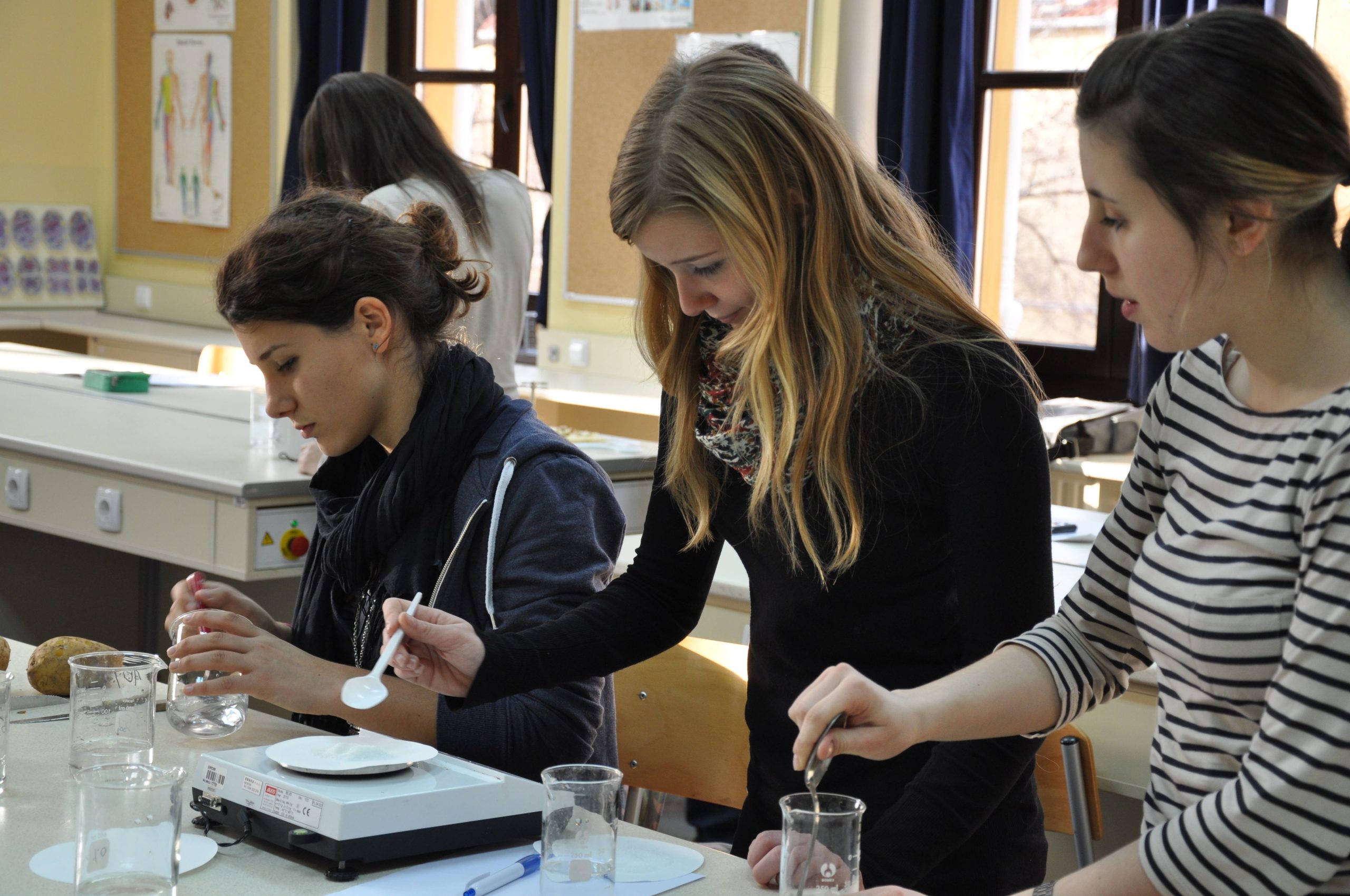
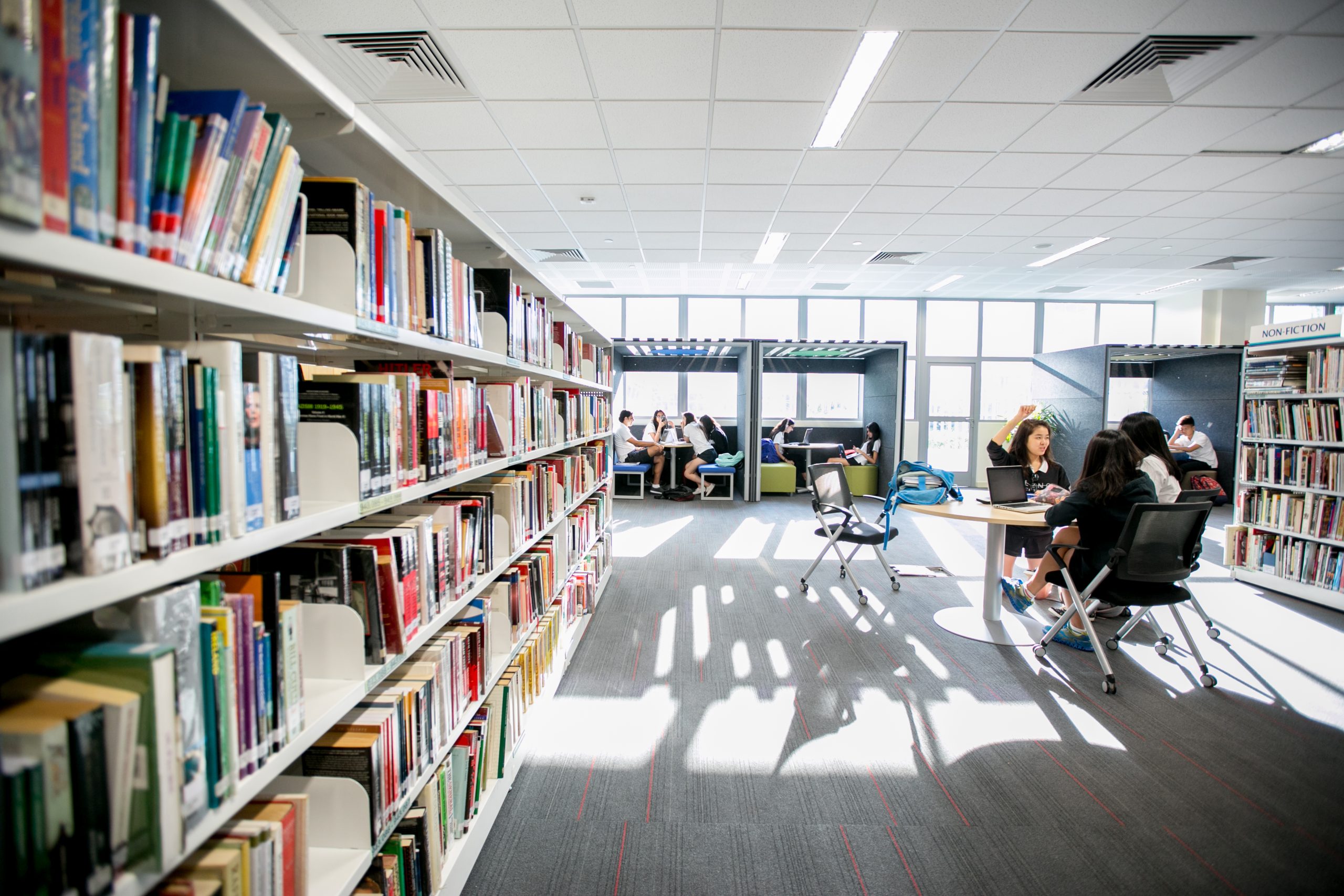
UWC Mostar distinguishes itself from other UWCs with its unique urban setting, located in the city centre alongside the Mostar Gimnazija. Science classes utilise well-equipped labs in the Gimnazija, while classrooms, a spacious library and assembly spaces are spread across shared locations.

Library
Large Study Room
Gym
Football / Handball Pitch
Volleyball Court
Athletics Track
Access to Local Swimming Pool
College Canteen
Visual Arts Studio
Theatre Arts Studio
Music Room
Residential accommodation:

UWC Mostar’s accommodation is spread across the city in five residences where 2-4 students are accommodated per room. Each residence has a master kitchen, laundry rooms, a common room, and kitchenettes on each floor as well as apartments for “House Parents” (parents providing residential support to students). One of the residences is also equipped with a gym available to all students.

Medical provisions

  • Resident doctor present at the school 
  • On call college nurse visits all five residences daily 
  • Nurse taking visits in consultation office 
  • Easily accessible medical care within the city for both physical and mental health care
  • Emergency medical care, medical services and hospitals available in the city of Mostar
Academic and emotional well-being

The school supports students’ academic and emotional well-being through:

  • Counselling department providing mental health support
  • Each student assigned a personal tutor that provides both personal and academic support
  • House Parent in each residence who provides practical living support
  • Two additional part-time House Parents and House Fellows (teachers who provide weekend residential support) 
  • Learning Support Coordinator
  • Peer Support programme where students are trained to offer support to other students
  • Students of colour mentor available to support students in developing deeper understanding of issues related to racism
  • LGBTQ+ student mentor

You can apply through your UWC national committee (NC) or through the UWC Global Selection Programme.

Filter

Sorry!

No Short Course found.

UWC Red Cross Nordic

UWC Red Cross Nordic

205 Students | 17-19-years

Flekke, Norway

1995

Banner imageBanner imageBanner image

Established in 1995, UWC Red Cross Nordic College (UWC RCN) is situated in Flekke, Norway. Proudly operating as a Foundation, the college is sustained by the collective contributions of all Nordic countries, with the Red Cross in Norway and Sogn & Fjordane standing as key founders. Embracing UWC’s commitment to humanitarian principles, students at UWC RCN actively pursue a Red Cross diploma, embodying our dedication to fostering global understanding and service.

Three Unique Features

  • Nordic: Public funding from the Nordic countries enables the college to undertake selection based entirely on merit and potential, creating a learning environment where diversity is truly experienced as a value for all.
  • Humanitarian: The Norwegian Red Cross is one of the founders of the college. In the extra academic programme, all students take an extensive Red Cross diploma, providing knowledge of the humanitarian principles of the organisation and the practical skills associated with them. The College shares the campus and cooperates with the Red Cross Haugland Rehabilitation Centre, which also gives students access to their training facilities.
  • Environmental: The college emphasises awareness of themes related to sustainability in several subjects and has an action component linked to it in several extra academic groups, including cooperation with the region. The certification for Environmental Lighthouse is undertaken with a yearly report.

Our students follow the International Baccalaureate Diploma Programme (IBDP), which is made up of three core components and six subject groups.

Average class size: 14 students

International Baccalaureate Diploma Programme

Core components

  • Theory of Knowledge: Students reflect on the nature of knowledge and on how we claim what we know.
  • The Extended Essay: An independent, self-directed piece of research finishing with a 4,000-word paper.
  • Creativity, Activity, Service (CAS): Students take part in a range of experiences and at least one project.
Subjects

  • Studies in language and literature: Danish Literature, English Literature, English Language & Literature, Norwegian Literature, Spanish Literature, Swedish Literature, School Supported Self-Taught Literature
  • Language acquisition: English B, French Ab Initio, Norwegian B, Spanish Ab Initio, Spanish B.
  • Sciences: Biology, Chemistry, Physics, Environmental Systems & Societies
  • Individuals and societies: Economics, Geography, History, Global Politics, Environmental Systems & Societies, Philosophy, Psychology 
  • Mathematics: Mathematics: Analysis & Approaches, Mathematics: Applications & Interpretation
  • The arts: Visual Arts, Theatre
Co-curricular

All students at UWC complete a co-curricular programme called Creativity, Activity and Service (CAS) – an integral part of the IB qualification. Students get the opportunity to choose a physical, a creative and a social service activity. At UWC RCN, students also complete the Red Cross diploma as part of the CAS programme.

Physical activities

Badminton
Ballet Fit
Basketball
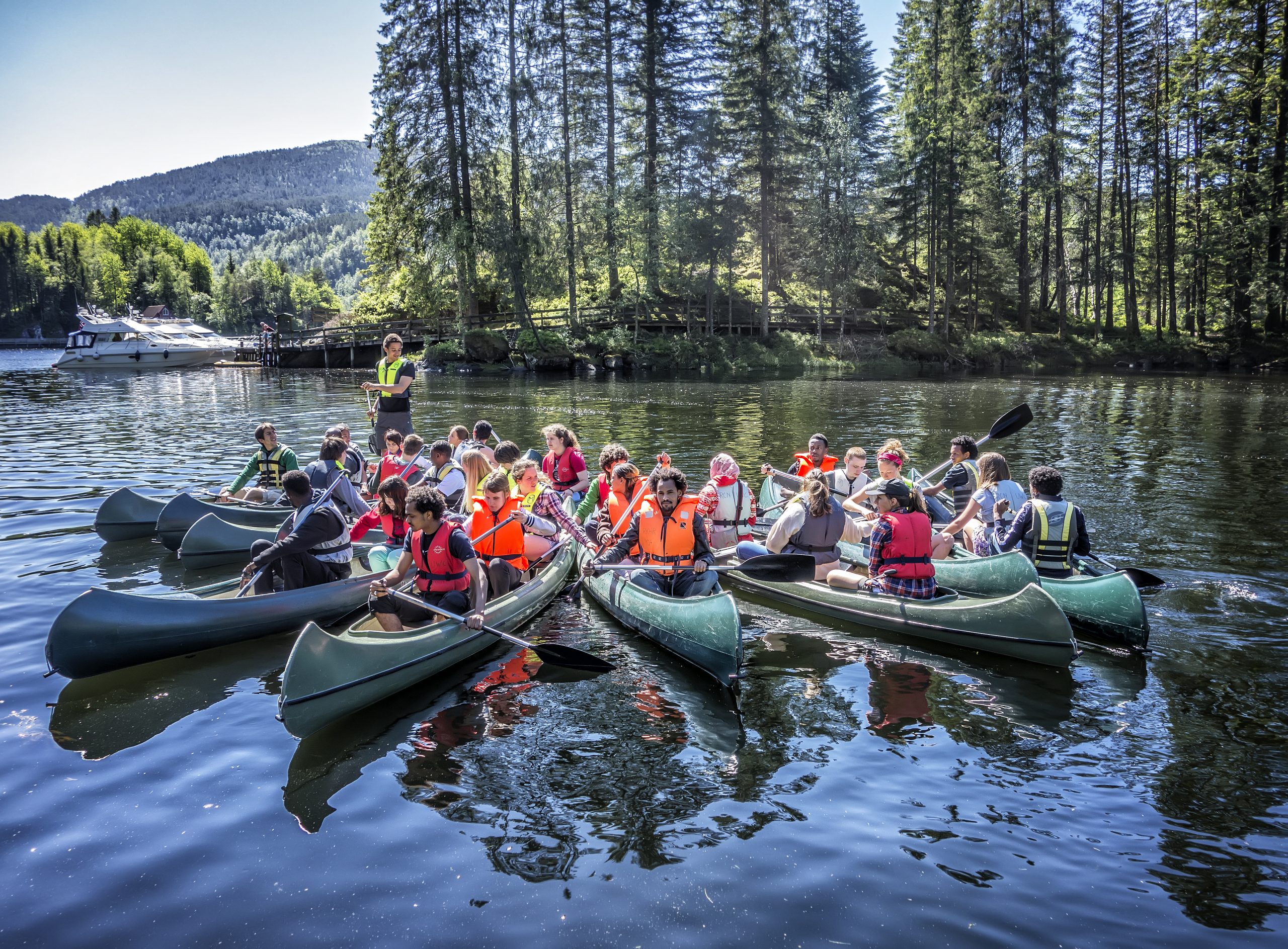
Canoeing
Cricket
Dance
Diving
Football
Interval Training
Outdoor Leadership
Paddlesports
RCN Boats (rowing and maintaining several historical Norwegian wooden boats)
Rock Climbing
Running (including Mountain Running)
Sailing
Sea Kayaking
Skiing
Sports and Outdoor Fitness
Swimming
Table Tennis
Various ball games
Volleyball
Yoga
Creative activities

Ceramics
College newspaper
Cooking
Creative Writing
Dance
Drama club
International Show
Model United Nations
Music
Music Composition
Painting
Photography
Printmaking
Programming (IT)
Robotics
TEDx
World News
Yearbook
Social service

Activities with the elderly
Activities with local “functions-limited” Centre
Amnesty International
Campus care
Climate Activism
Coastal Clean Up
First Aid Team
Gender and Sexuality
Model United Nations
Peer listeners
Red Cross Rehabilitation/Health Centre (projects with patients)
Ridderne – The Knights
Social entrepreneurship (BOOST, DROP, LEAF)
SOS Children’s Villages
Student Council
Work with adults with mental disabilities
Work with adults with physical disabilities
Work with refugees
Work with young children (primary school)
World Today

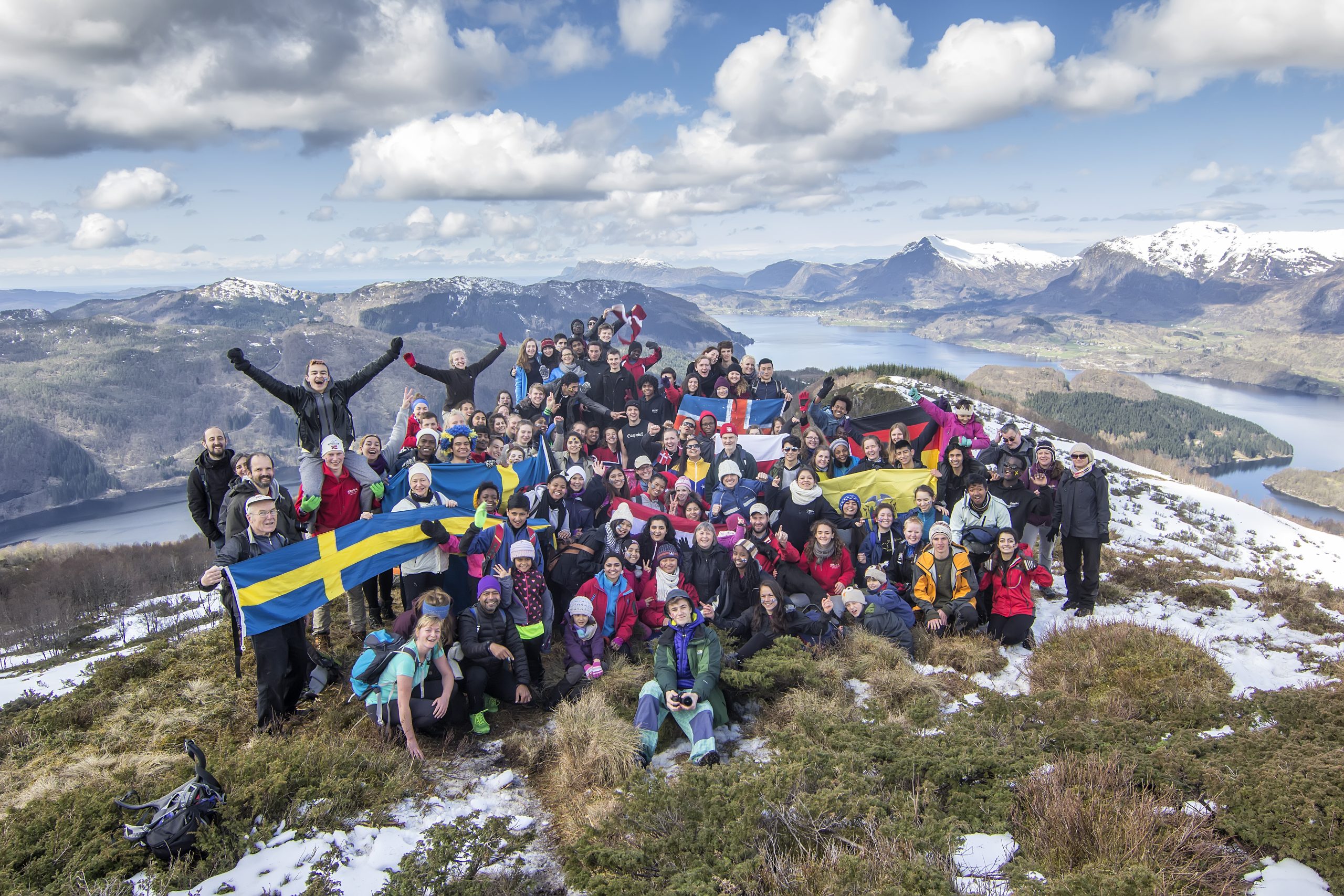
The beautiful UWC RCN campus is nestled on the edge of a fjord in Flekke, Norway. The outdoor setting provides extensive opportunities for engaging with the natural environment, which is a defining aspect of the college.

Medical Centre
Theatre Stage
Indoor Swimming Pool
Football pitch
Art Centre
Music Room
Baking House
Library
Auditorium
‘Kantine’ Student Kitchen
Residential accommodation:

The students live in rooms of five (a combination of 1st and 2nd year students) with an ensuite bathroom. The Houses have individual common areas, with sofas, a table and chairs, refrigerator and freezer, notice boards and simple cooking tools, including a stove, microwave and toaster. House Leaders live adjacent to the boarding houses.

Medical provisions

  • Full-time nurse
  • Medical Centre
  • Wellbeing counsellor
  • Student First Aid Team
  • Nearby doctor in Dale and hospital in Førde
  • Students registered with national health system
Academic and emotional well-being

UWC RCN requires an extra level of resilience given its remote location and the darkness of the winter period. Some students find the isolation of the campus to be more challenging than they expected, although there is a wide range of support in place to help them manage this.

The school supports students’ academic and emotional wellbeing through:

  • Wellbeing Counsellor – qualified Social Worker offering socio-emotional support to students
  • Community Life Leader and House Leaders are qualified Mental Health First Aiders 
  • SAD lamps in the common areas 
  • Peer support organisations, including the Peer Listeners, Gender and Sexuality Group and Student Council 
  • Regular workshops on Diversity and Inclusion, Consent, Non-Violent Communication skills, Active listening 
  • Each student has a personal advisor with whom they meet regularly, as well as a House Leader

You can apply through your UWC national committee (NC) or through the UWC Global Selection Programme.

UWC South East Asia

UWC South East Asia

6,147 Students | 4-18-years

Singapore

1971

Banner imageBanner imageBanner image

UWC South East Asia (UWC SEA) became a full member of the UWC movement in 1975. In 1998, the college expanded to include a younger years programme accepting students from 4 years old to become a K-12 school. In 2011, a second campus opened, making UWC SEA the largest of the UWC colleges, with students from more than 100 countries and more than 90 languages spoken. UWC SEA offers a K-12 holistic and concept-based curriculum. The International Baccalaureate (IB) is offered in Grades 11-12, and applications are open for day students and residential boarding from Grade 8.

Three Unique Features

  • Diversity: Students are selected based on deliberate diversity, including factors such as culture and life experiences. The UWC SEA Learning Programme provides an ideal platform for the development of intercultural and interpersonal understanding that contributes to a sense of belonging for all in the community.
  • Vibrant Location: Situated in the city-state of Singapore, UWC SEA leverages its central location as a global hub in Asia. Students benefit from meaningful local community connections woven into their learning experiences. Students also have the opportunity to travel to neighbouring countries throughout Asia as part of the Outdoor Education programme (OED). 
  • K-12 concept-based curriculum: The holistic learning programme consists of five interlinking elements: academics, activities, outdoor education, personal and social education and service. The bespoke curriculum from K1 to Grade 12 leads learners through interdisciplinary and project-based learning in preparation for the IBDP.
Contact details – Dover campus – TEL: +65 6775 5344Email school
Contact details – East campus – TEL: +65 6305 5344Email school

In the final two years, students follow the International Baccalaureate Diploma Programme (IBDP), which is made up of three core components and six subject groups.

Average class size: 22

Core components

  • Theory of Knowledge: Students reflect on the nature of knowledge and on how we claim what we know.
  • The Extended Essay: An independent, self-directed piece of research finishing with a 4,000-word paper.
  • Creativity, Activity, Service (CAS): Students take part in a range of experiences and at least one project.
Subjects

  • Language A (first language): English Language and Literature; English Literature; Chinese Language and Literature; Dutch Language and Literature*; French Language and Literature; German Language and Literature*; Hindi Literature; Japanese Literature; Korean Literature*; Spanish Language and Literature and School Supported Language
  • Language B (acquisition): English; Chinese; French; German*; Japanese*; Spanish; or French ab initio; Mandarin ab initio; Spanish ab initio
  • Individuals and Societies: Business Management; Economics; Geography; Global Politics; History; Philosophy; Psychology
  • Sciences: Biology, Chemistry, Physics, Environmental Systems & Societies
  • Mathematics: Maths – Analysis and Approaches, Maths – Applications and Interpretation
  • The Arts: Visual Arts, Theatre, Dance, Film, Music

* subject is offered at Dover Campus only

Systems Transformation Pathway

IB Systems Transformation: Leadership for Change is an innovative new course, carefully designed by passionate and experienced educators in partnership with the IB. It is for students looking for further challenges and authentic, project-based experiences in their learning journey. This course will also help shift the IB Diploma worldwide towards a more flexible model with more real-world learning, more authentic assessment and greater student agency.

The Systems Transformation Pathway focuses on three areas:

  • Sustainability
  • Intercultural understanding 
  • Peacebuilding

Through project-based learning, students explore how to connect and lead others; how to understand and navigate complex systems; and how to be resilient and adaptable in the face of challenges and failures. There are five distinct areas in which skills and capabilities will be taught and assessed in this course. These are: Project and Change Management; Leadership; Systems Thinking; Design Thinking; and Changemaker Mindsets.

The IB Systems Transformation: Leadership for Change is assessed entirely by coursework, balanced over the two years of the programme.

Co-curricular

All IBDP students at UWC complete a co-curricular programme called Creativity, Activity and Service (CAS) – an integral part of the IB qualification. Students get the opportunity to choose a physical, a creative and a social service activity.

Students are involved in CAS for the whole of their IB Diploma and ideally spend 3-4 hours a week engaged in an extracurricular pursuit. Many experiences involve a benefit to the community and encourage students to consider global issues and the ethical outcomes of their participation.

Physical activities

Badminton
Basketball
Climbing
Cricket
Cross Country
Football
Golf
Gymnastics
Hockey
Netball
Rugby
Sailing
Softball
Swimming
Tennis
Touch Rugby
Track and Field
Ultimate Frisbee
Volleyball
Creative activities

Drama Productions
Instrumental Teaching Programme
Ensembles
Choirs
Various Clubs
Student-led publications
Alumni Council
Ambassadors
Global Concerns Executives
Initiative for Peace
Model United Nations
National Youth Achievement Award
Round Square Committees
Sports Councils
Student Councils
Dance
Social service

Elderly care
Persons with disabilities
Learning Support
Programmes for disadvantaged children
Foreign domestic workers
Adults in long-term hospice care
Global Concerns
Initiative for Peace
Model United Nations
National Youth Achievement Award
Round Square Committees
Sports Councils
Student Councils
Student-led publications
Green Campus initiatives

UWC SEA campuses offer exceptional facilities suited to the hands-on and technologically integrated learning programme. Equipped with state-of-the-art technology and tools, both campuses provide an environment to support all five elements of our learning programme.

Playgrounds (age-appropriate)
Theatres
Music rooms
Multimedia and recording studios
Libraries
Community Lab (East) and Ideas Hub (Dover)
Olympic-sized outdoor swimming pools
Infant swimming pools
Gymnasiums
Climbing walls
Ropes courses
Football pitches
Basketball courts
Tennis courts
Dance studios
Arts centres
Wellness centres
Medical centres and sick bays
Residential Boarding Houses
Canteens and cafes
Garden facilities
PA lounges
Residential accommodation:

Dover Campus has a capacity for 185 students in its two residential houses. East Campus (Tampines House) has a capacity for 155 students in a single residence. The gender split (50/50) across both campuses is maintained wherever possible, and approximately 70% of the students are in their IB Diploma years. Dover residents are in rooms of four with a shared ensuite bathroom. East residents in Grades 8-9 are in rooms of four, Grades 10-11 are in rooms of two, and Grade 12 residents have a single room with a sink. Shared, single-gender bathroom facilities are located at opposite ends of Tampines House.

Medical provisions

  • Medical clinic with a General Practitioner and registered nurses.
  • College sick bays staffed by registered nurses.
  • House Parents (parents providing residential support to students) and registered nurses are available to help students with follow-up medical appointments.
  • Hospitals located nearby for emergencies.
Academic and emotional well-being

The school supports students’ academic and emotional well-being through:

  • Wellness and Counselling Centre on both campuses 
  • Students placed in a mentor group of 16 students under the care of a teacher-mentor
  • Houseparents provide support for residential boarders

You can apply through your UWC national committee (NC). Direct applications are also possible. For more information about UWC South East Asia, visit the website.

UWC Thailand

UWC Thailand

540 Students | 16-19-years

Phuket, Thailand

2008

Banner imageBanner imageBanner image

UWC Thailand (UWCT) is a peaceful retreat in the foothills of Phuket’s green-capped mountains. This distinctive setting reflects the school’s dedication not just to academic excellence but also to the broader values of global citizenship, wellness and environmental stewardship. Engaged in activities from coral reef monitoring to integrating positive mindfulness practices, UWC Thailand prioritises the well-being and development of its students, the community and the environment in all its endeavours.

Three Unique Features

  • Good Heart: UWC Thailand integrates Social Emotional Learning and Mindfulness into its curriculum, promoting the development of key life skills, including self-awareness and management, social awareness and effectiveness and impactful and ethical approaches to work. 
  • Balanced Mind: UWC Thailand, an International Baccalaureate (IB) continuum school for Pre-Kindergarten to Grade 12, is dedicated to skill development through diverse programmes including mindfulness, outdoor education, sports and community engagement. Blending rigorous academics with practical experiences instils in students the belief that they are capable of more than they know. 
  • Healthy Body: As an athlete-friendly school and member of the World Academy of Sport, students have access to exceptional facilities and seamlessly balance elite-level training in swimming and triathlon with a world-class education, supported by dedicated teachers and coaches.

In their final two years, UWC Thailand students follow the International Baccalaureate Diploma Programme (IBDP), which is made up of three core components and six subject groups.

Average class size: 24 students

International Baccalaureate Diploma Programme

Core components

  • Theory of Knowledge: students reflect on the nature of knowledge and on how we know what we claim to know.
  • The Extended Essay: an independent, self-directed piece of research, finishing with a 4,000-word paper.
  • Creativity, Activity, Service (CAS): students take part in a range of experiences and at least one project.
Subjects

  • Studies in language and literature: English Literature, Thai Language & Literature, School Supported Self-Taught Literature, Language & Culture 
  • Language acquisition: Chinese B Ab Initio, English B, French B, French B Ab Initio, Spanish B Ab Initio 
  • Individuals and societies: Business Management, Economics, History, Global Politics, Environmental Systems & Societies 
  • Sciences: Biology, Chemistry, Design Technology, Physics, Environmental Systems & Societies
  • Mathematics: Maths – Analysis and Approaches, Maths – Applications and Interpretation 
  • The Arts: Visual Arts, Film
Co-curricular

All IBDP students at UWC complete a co-curricular programme called Creativity, Activity and Service (CAS) – an integral part of the IB qualification. Students get the opportunity to choose a physical, a creative and a social service activity.

UWC Thailand’s strong focus on Outdoor Experiential Education and Place-Based Service Learning ensures students engage with the island’s diverse environments. This commitment sustains partnerships with neighbouring service organisations, addressing wildlife conservation, ecological restoration, community support and action-oriented governmental work for policy development and change.

Physical activities

Badminton
Basketball
Climbing
Cricket
Cycling
Football
Golf
Gymnastics
Kayaking
Hiking
Mountain Biking
Muay Thai
Pilates
Orienteering
Running
Sailing
Scuba Diving
Skateboarding
Surfing
Swimming
Table Tennis
Tennis
Touch Rugby
Volleyball
Weight Lifting / Fitness training
Yoga
Creative activities

Anthropology
Art Group
Baking
Band
Chess
Choir
Dance
Debate
Drama club
Film Makers
Guitar HAIR-itage Tales & Art
Hispanic language and cultur
Kucheza – African Dance
Maker Space / Design
Model United Nations
PAPA – Pitch Perfect PAPA: UWCT Musical Theatre
Photography
Public Speaking
Thai Authentic Cooking Class
“Young Inheritors of Traditions” (YIT)
Social service

Amnesty International
All For Village
BanYa Literacy Centre
BIG Because I am a Girl
Bodhi Dogs Earth
Home Gibbon Rehabilitation Sanctuary
Good Shepherd
MANTA coral
MANTA Mangrove
Mirror Foundation Phuket
Elephant Sanctuary
Plastic Free
Phuket Sexuality and Gender Alliance
Shaka Student Cafe Sign Language
UWC Thailand Young Volunteers In Action
UWCrust Pizza Group
Yaowawits

UWC TH’s campus lies in the foothills of a mountainous national park in a rural area on the northern end of the island of Phuket, a short 15-minute drive from some of the most beautiful beaches in the world. On campus, students have access to a wide variety of learning spaces and resources.

Library
Cafeteria
Student-run cafe
Indoor, multipurpose gymnasium
Climbing and gymnastics gym
Outdoor, covered multi-purpose court
Covered football pitch
Multi-use grass field
Frisbee golf course
Skate park
World-class athletic and sports facilities
25 and 50-metre Olympic pool
Weight rooms
Tennis courts
Beach volleyball courts
Yoga and Pilates facilities
Jiu-Jitsu training facilities
Fitness centre
Residential accommodation:

The primary boarding house accommodates students in rooms of 3-6 students in separate wings for male and female students. Boarding facilities prioritise deliberately diverse living arrangements to best develop and foster intercultural relationships and understanding. All residences have common rooms, communal kitchens, laundry facilities and study spaces.

Medical provisions

  • Full-time nurse
  • International standard hospital within 10km of the campus
Academic and emotional well-being

The school supports students’ academic and emotional well-being through:

  • Two full-time counsellors 
  • Advisory programme focused on social-emotional wellness and mindfulness 
  • Full-time House Parents (parents providing residential support to students) for all boarding houses 
  • Co-Directors of Residential Life to support students

You can apply through your UWC national committee (NC) or through the UWC Global Selection Programme. Direct applications are also possible for the lower years. For more information about UWC Thailand, visit the website.

UWC-USA

UWC-USA

220 Students | 17-19-years

Montesuma, New Mexico

1982

Banner imageBanner imageBanner image

Founded in 1982, UWC-USA’s location in Montezuma, New Mexico, was chosen because of its remarkable beauty and proximity to immense wilderness areas in the historic region of Northern New Mexico. At UWC-USA students forge connections with peers of diverse backgrounds, engage in community service and develop a profound respect for nature through wilderness experiences. Simultaneously, they navigate a demanding IB diploma programme, gaining practical idealism skills that shape them into lifelong changemakers.

Three Unique Features

  • Community service: Students perform over 17,000 hours of community service each year in soup kitchens, at the local residential mental hospital and in local schools. San Miguel County, where Montezuma is located, has one of the highest poverty rates in the country.
  • Wilderness: The Wilderness Programme at UWC-USA focuses on empowering students to embrace their personal strengths and leadership skills through self-discovery in the outdoors. Opportunities exist in backpacking, hiking, river walking, adventure biking, climbing, swimming and overnight camping with an emphasis on positive group dynamics, individual self-reflection and safety.
  • Bartos Institute: The Bartos Institute for the Constructive Engagement of Conflict has an endowed array of programmes dedicated to fostering conflict resolution and cross-cultural skills.

UWC-USA provides a two-year educational pathway for students aged 15-19: the International Baccalaureate Diploma Programme. The IBDP is made up of three core components and six subject groups.

Average class size: 16 students

International Baccalaureate Diploma Programme

Core components

  • Theory of Knowledge: Students reflect on the nature of knowledge and on how we claim what we know.
  • The Extended Essay: An independent, self-directed piece of research finishing with a 4,000-word paper.
  • Creativity, Activity, Service (CAS): Students take part in a range of experiences and at least one project.
Subjects

  • Studies in language and literature: English Literature, English Language & Literature, French Language & Literature, Spanish Literature, School Supported Self-Taught Literature
  • Language acquisition: English B, French B, French B Ab initio, Italian B Ab initio, Spanish B, Spanish B Ab initio
  • Individuals and societies: Economics, History, Global Politics, Social & Cultural Anthropology, IT in a Global Society
  • Sciences: Biology, Chemistry, Physics, Environmental Systems & Societies
  • Mathematics: Mathematics: Analysis & Approaches, Mathematics: Applications & Interpretation
  • The arts: Visual Arts, Theatre, Dance
Co-curricular

All students at UWC complete a co-curricular programme called Creativity, Activity and Service (CAS) – an integral part of the IB qualification. Students get the opportunity to choose a physical, a creative and a social service activity. UWC-USA offers approximately 50 CAS options that are grouped into four tracks: Arts and Culture; Constructive Engagement of Conflict; Sustainability; and Wilderness.

Physical activities

Wilderness Program Wild ExEdinton
Wilderness Leadership Training
Tennis
Ultimate Frisbee
Volleyball
Yoga
Zumba
Swing Dance
Squash
Table Tennis
Basketball
Football (Soccer)
Dance Ensemble
Physical Fitness
Running
Creative activities

African Chorus
Latin Ensemble
Percussion Ensemble
Global Chorus
Silk Road Ensemble
Chamber Music
Jazz and Contemporary Ensemble (Music Improv)
Dance Ensemble
Yearbook
Marketing and Communications
Play Production
Theatre Technology
Literati (Student-run periodical)
Poetry Reading
Model United Nations (MUN)
Youth and Government
Social service

Work with homeless shelters
Work with teens in a behavioural health institute
Tutor Spanish in the local schools
Philosophy for children course in local schools
Work in the local soup kitchen
Work with developmentally disabled adults in a local institute
Work with the elderly in assisted living facilities
Student Council

UWC-USA is located at the edge of the Pecos Wilderness in the foothills of the Sangre de Cristo Mountains. The 200 acre campus is anchored by the famous Montezuma Castle and includes several classrooms, residential buildings as well as an extensive sports complex. The 20-acre Agroecology Research Centre – or ‘The Farm’ – features a working farm utilising sustainable agriculture techniques, providing produce for the campus dining hall.

Health Clinic
Theatre Stage
Gym
Football Pitch
Basketball Courts
Art Centre
Tennis Courts
Music Room
20-acre Farm
Climbing Wall
Squash Courts
Weight Room
Meditation Light Sanctuary
Dance Studio
Greenhouse
Student Centre
Library
IT Centre
Residential accommodation:

There are six residential dorm spaces, each housing around 40 students, with resident coordinators and resident assistants for each dorm. There is a kitchen and “dayroom” in each facility, with students living two to three per room.

Medical provisions

  • Health Clinic on campus
  • Full-time registered nurse
  • Hospital within 20 minutes of campus
Academic and emotional well-being

Support at UWC-USA comes in various ways, starting with our general ethos of celebrating our differences while looking for what connects us all. Students have access to small classes, excellent teachers, college counsellors, residence coordinators, student RAs, academic advisors, personal counsellors, peer tutors, a health clinic and licensed therapists.

The dining hall offers a wide variety of food options including both meat and plant-based choices at every meal. Much of the produce is grown on the UWC-USA farm.

Students also find support via their various identities in groups such as the Black Caucus, LGBTQ+ association and regional affiliation. Other support comes from the Student Wellness Education and Empowerment Team (SWEET), Constructive Engagement of Conflict, Climate Action Team and the Inclusivity, Diversity, Equity and Access (IDEA) team. Courses in CPR, First Aid and Mental Health First Aid are offered regularly.

You can apply through your UWC national committee (NC) or through the UWC Global Selection Programme.

Waterford Kamhlaba UWC of Southern Africa

Waterford Kamhlaba UWC of Southern Africa

620 Students | 11-20-years

Mbabane, Eswatini

1963

Banner imageBanner imageBanner image

Waterford Kamhlaba UWC of Southern Africa (WK UWCSA) was founded in 1963 as a response to the separate and unequal educational systems in South Africa. The property on which the school is situated was originally a farm called “Waterford Park Estate” and Kamhlaba means “of the world” or “of the earth” and therefore without distinctions such as race or religion. Different to all the other UWC schools and colleges, the academic year at Waterford Kamhlaba runs from January to November.

Three Unique Features

  • Strong relationships with local change-makers: Through community service, the school has strong relations with local organisations such as the refugee camp and neighbourhood care points (children’s welfare centres).
  • The only UWC school on the southern hemisphere calendar: While other UWC schools’ academic years usually run between September and May, Waterford’s follows the southern hemisphere norm starting in January.
  • First multi-racial school in SA: WK UWCSA was the first multiracial school in Southern Africa; founded as a direct response to South Africa’s system of apartheid, which enforced racial segregation as policy and did not permit multi-racial schooling. Its history of embracing and celebrating diversity from across Africa and beyond is something deeply ingrained in Waterford Kamhlaba’s ethos. It continues to be at the core of its values today.

In their final two years, our students follow the International Baccalaureate Diploma Programme (IBDP), which is made up of three core components and six subject groups. We also offer an extended induction period to assist with English proficiency.

Average class size: 17 students

Pre-IBDP & Lower School Programme

Aside from the IBDP, WK UWCSA offers Forms 1- 4. Forms 1 and 2 aim to establish foundational skills with mixed ability classes and tutor guidance, while Form 3 introduces subject choices in Creative Arts and Languages. Forms 4 and 5 focus on the Cambridge IGCSE qualification, preparing students for diverse academic paths and global challenges.

International Baccalaureate Diploma Programme

Core components

  • Theory of Knowledge: Students reflect on the nature of knowledge and on how we claim what we know.
  • The Extended Essay: An independent, self-directed piece of research finishing with a 4,000-word paper.
  • Creativity, Activity, Service (CAS): Students take part in a range of experiences and at least one project.
Subjects

  • Studies in language and literature: English Literature, English Language & Literature, Siswati Literature
  • Language acquisition: English B, French B, French B Ab initio, Spanish B, Spanish B Ab initio
  • For Short courses
  • Sciences: Biology, Chemistry, Physics, Environmental Systems & Societies
  • Mathematics: Maths – Analysis and Approaches, Maths – Applications and Interpretation
  • The arts: Visual Arts, Music, Theatre
Co-curricular

All students at UWC complete a co-curricular programme called Creativity, Activity and Service (CAS) – an integral part of the IB qualification. Students get the opportunity to choose a physical, a creative and a social service activity.

Physical activities

Athletics
Badminton
Basketball
Canoeing
Hiking
Hockey
Netball
Rock Climbing
Rugby
Soccer
Swimming
Tennis
Creative activities

Chess
Leadership Development Forum
Link Group
Model United Nations
Permaculture Garden
Public Speaking and Debate
Writing Club
Social service

AWARE
Careers Support Initiative (CSI)
Government Hospital Service
Link Group
Mpaka Refugee Camp
Msunduza Care Point
Peer Supporters
Permaculture Garden
Salvation Army
Sobhiyezo Pre-school
SOS Sportland Swimming
Vision Comserve
Young Heroes
And many more!

Perched on a mountain top in Sidwashini, a 10-minute drive from the Swazi capital Mbabane, is a gathering of colourful houses and buildings. That’s Waterford Kamhlaba UWCSA. Originally designed by renowned architect and WK parent, Amancio (Pancho) Guedes, Waterford has grown as much in physical size as it has in student numbers. The Waterford community is highly influenced by the social, historical and cultural context of Eswatini.

Medical Centre
Theatre Stage
Amphitheatre
Dance Studio
IT Centre
Outdoor Swimming Pool
Gym
Football pitch
Basketball courts
Tennis Courts
Art Centre
Darkroom
Music Room
Residential accommodation:

There are eight student residences. Typically, boys and girls are separately accommodated on different floors/wings. Most students are in rooms of four with nationalities and cultures deliberately mixed. All houses have a common room, kitchen and quiet/study room with computer and Wi-Fi access.

Medical provisions

  • Full-time nurse on campus
  • Two school counsellors
  • Private clinic within 10 minutes of campus
Academic and emotional wellbeing

The school supports students’ academic and emotional well-being through:

  • Full-time Deputy Head of Pastoral
  • Head of Residences who provides support and oversight to students living on campus 
  • School counsellors providing additional mental health supports 
  • All students are assigned a tutor group 

You can apply through your UWC national committee (NC) or through the UWC Global Selection Programme. Direct applications are also possible for the lower years. For more information about Waterford Kamhlaba UWC of Southern Africa, visit the website.

Filter

Sorry!

No Short Course found.

Previous12Next
Secret Link